Modular Structures: Design & Analysis
An investigation into the feasibility of pre-assembled, sustainable housing units using natural materials.
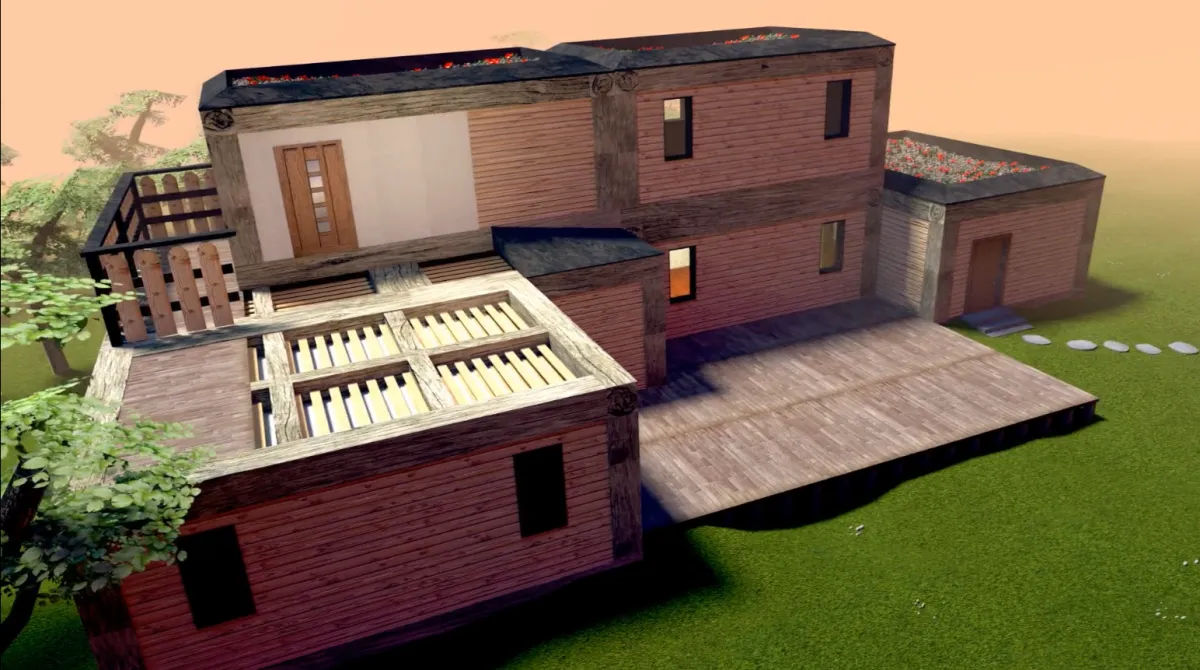
Visualizing scalability: Multiple modules joined to form a complete housing structure with internal framing exposed.
Project Objectives
This research project (Travaux personnels encadrés) focused on the design and engineering of modular structures—specifically pre-assembled buildings. The primary objective was to evaluate a feasible methodology for constructing these units using wood as the primary structural material. The concept relies on scalability; by utilizing standardized units, varied architectural configurations can be achieved while maintaining structural consistency.
Main Tasks
The development of the project was executed through several key engineering phases:
- Literature Review: Analysis of existing modular structures and assembly techniques.
- Geometric Design: Determination of the optimal shape for individual structural modules to allow for versatile joining.
- Load & Effort Assessment: Calculation of structural loads, including wind resistance, internal live loads, and snow accumulation.
- Thermal Capability Analysis: Assessment of the thermal insulation properties of the modular units.
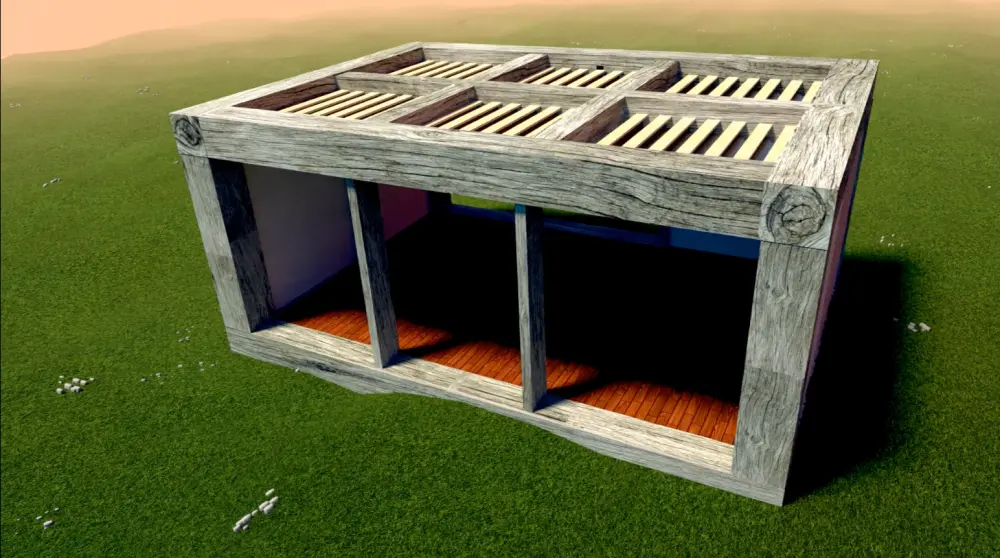
Single Unit Design: The fundamental building block of the modular system.
Empirical Validation & Model Testing
As formal structural mechanics knowledge was not yet available to us at the time, an empirical approach was adopted through reduced-scale model testing. We constructed a prototype using pine wood and steel brackets to simulate the full-scale structural design.
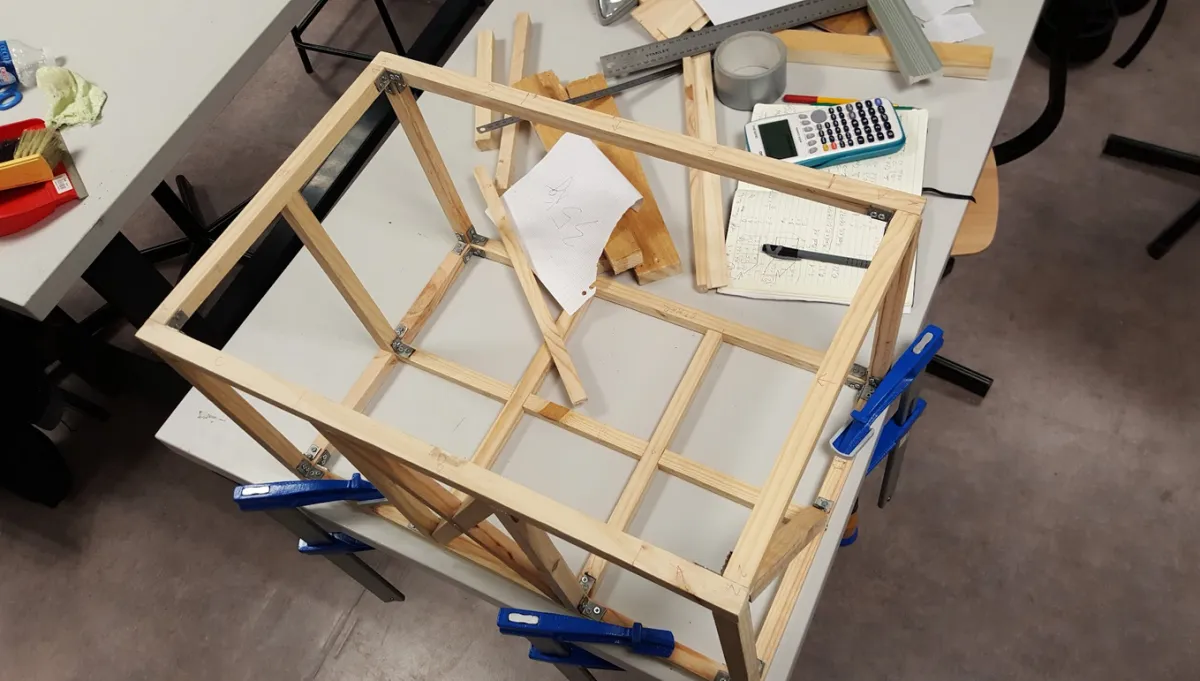
Reduced-scale prototype constructed from pine wood and steel brackets.
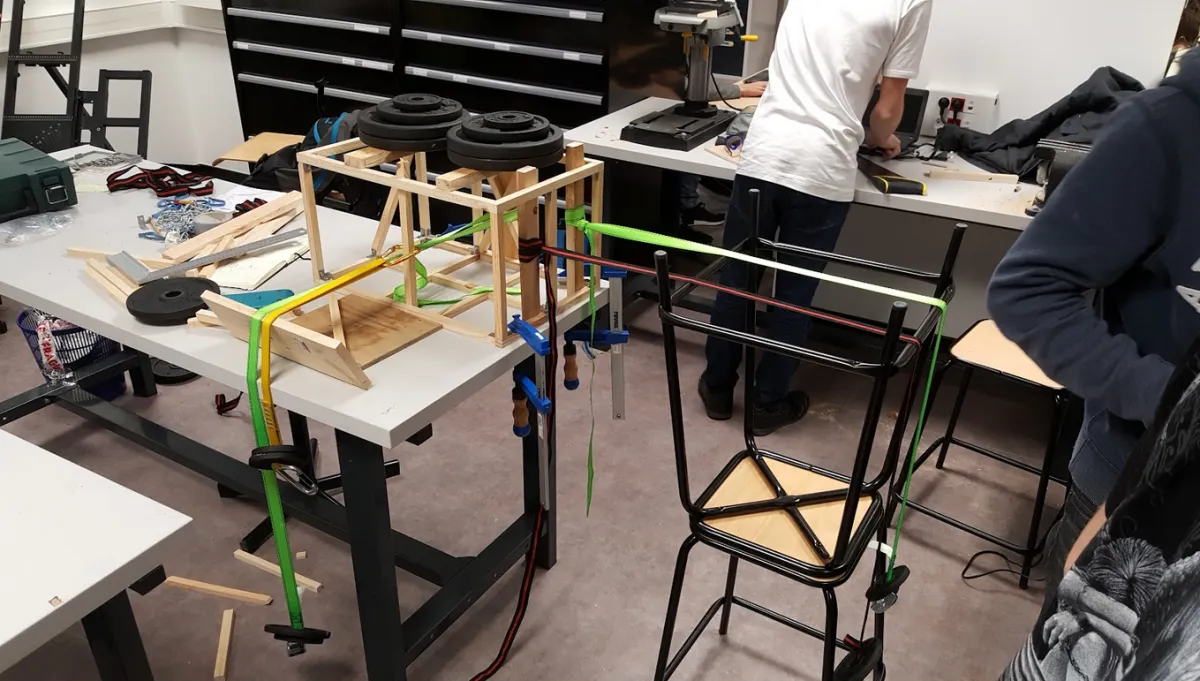
Empirical robustness testing: Applying mechanical efforts to observe structural response.
Structural robustness was evaluated by applying mechanical efforts to the model to observe deformation and failure modes. This allowed for a practical assessment of the design's stability under simulated stress, providing data for design iterations.
After the Project: Presentation at CERN
Following the successful completion of our research and testing, our team (Benjamin JENA and myself) was selected based on the technical quality of our work to present at the "Mon TPE/TM en 15’" event.
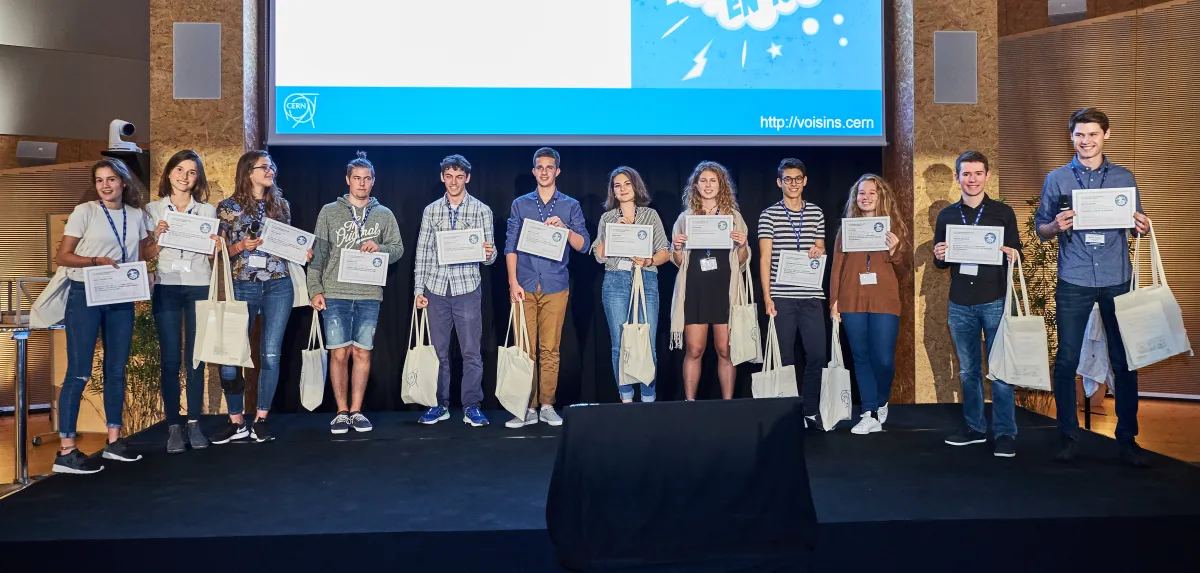
All TPE/TM selected presenters at CERN Globe of Science and Innovation. Benjamin and myself fourth and fifth from the left.
© CERN — Source: CERN Audiovisual Media (Educational Use)
This event, hosted at the Globe of Science and Innovation at CERN, brings together the top-ranked research projects from the France and Switzerland border region. It served as a platform to communicate our findings on sustainable modularity to a professional audience of scientists and engineers.