Synova SA: Water-Jet Stability
Applying fluid mechanics fundamentals to extend the usable working length of the Laser MicroJet®
and validate findings experimentally across industrial-grade cutting scenarios.
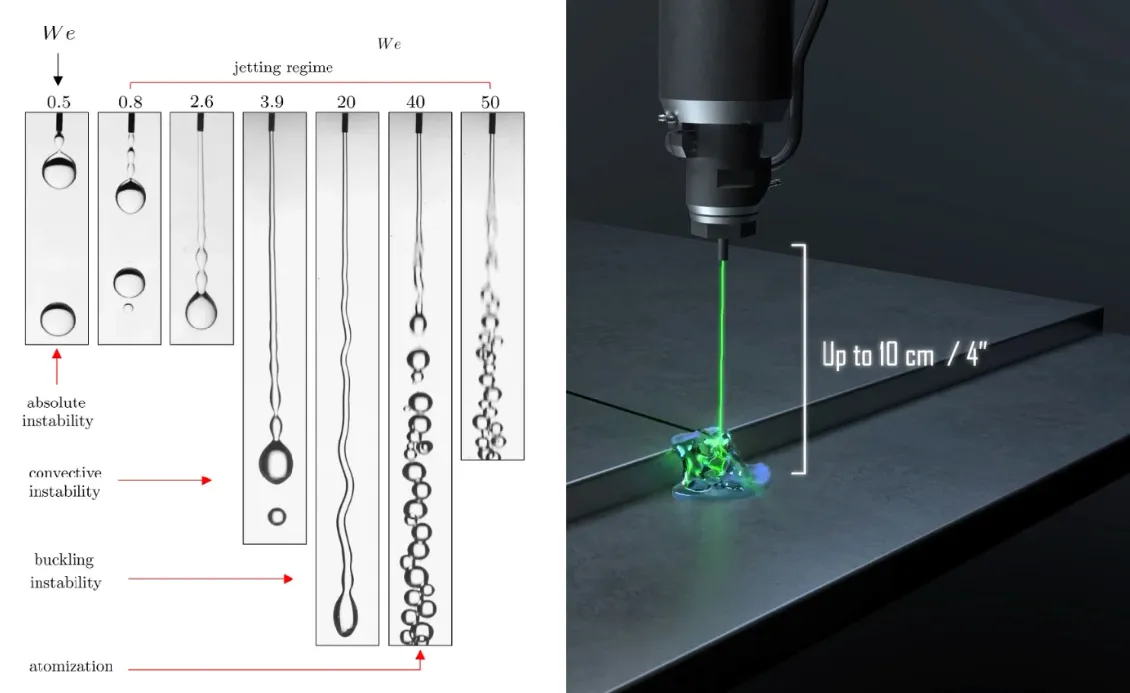
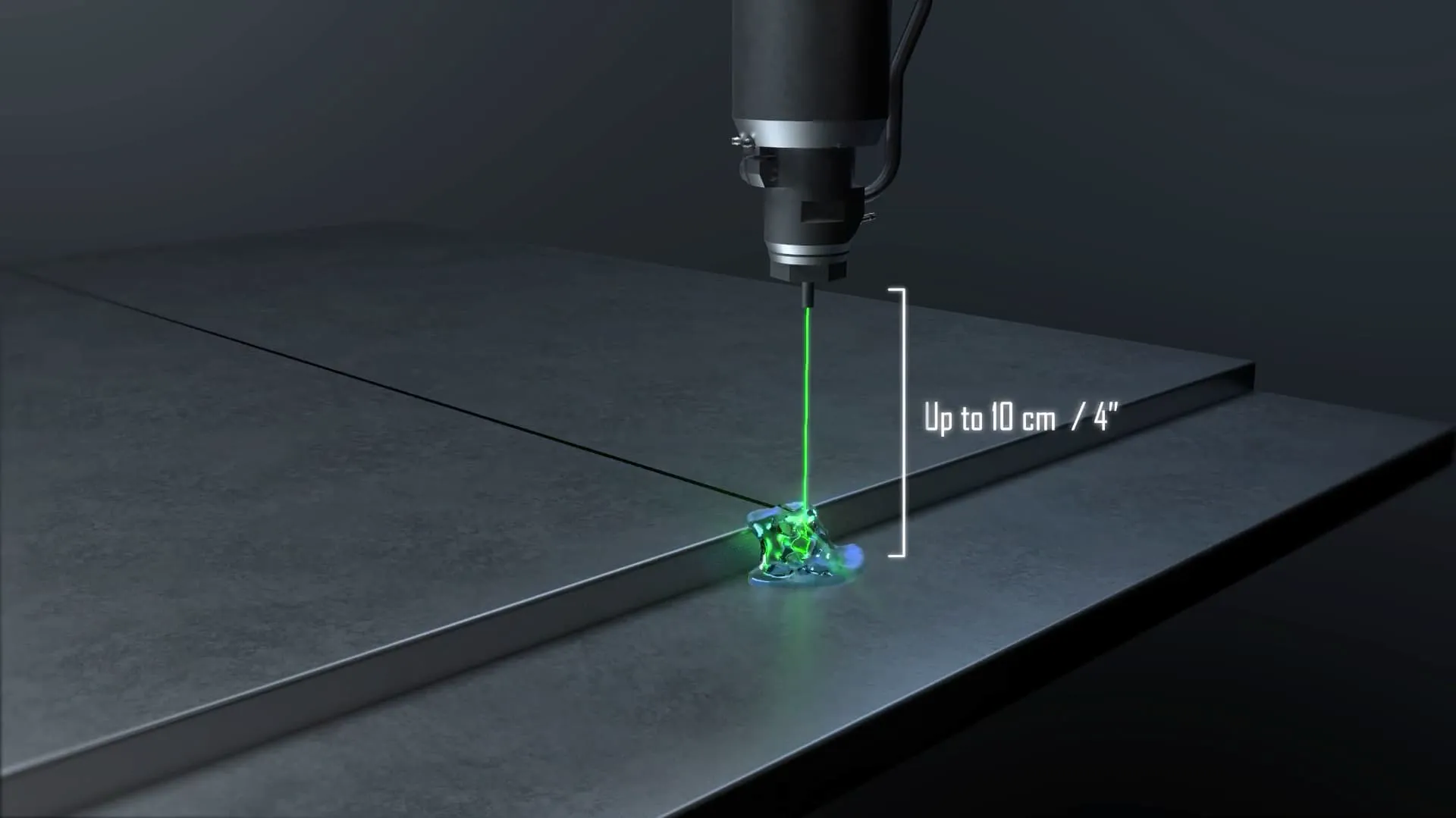
Illustration of a typical Rayleigh–Plateau jet instability (left) and the Laser MicroJet® (LMJ) technology (right), where a laser is guided inside a ~50 µm water column. Credits: ResearchGate (left), Synova SA (right).
Context: Synova SA & the Laser MicroJet® Technology
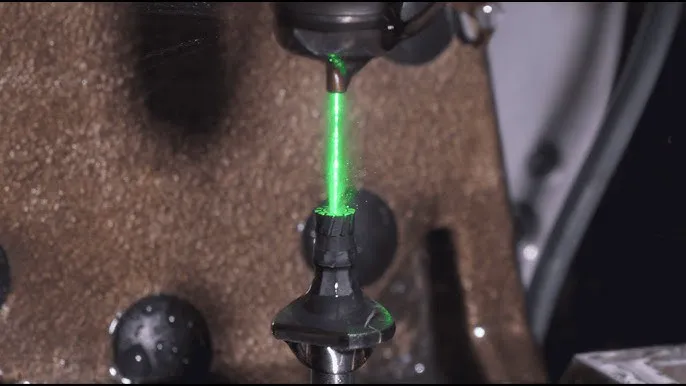
Synova SA is a Swiss company specializing in the design and manufacture of 3- and 5-axis CNC machines built around their patented Laser MicroJet® (LMJ) technology. A water microjet (~50 µm diameter) acts as an optical waveguide for the laser, delivering it to the workpiece with no defocusing over depth. The result is deep, parallel-sided cuts that conventional laser systems simply cannot achieve, combined with in-process water cooling that limits thermal damage to the part.
This makes LMJ particularly well-suited for high-value or thermally sensitive applications — semiconductor dicing, aerospace-grade alloys, medical implants, and diamond processing — where surface integrity and dimensional accuracy are non-negotiable. The full range of application areas spans from microelectronics to luxury goods manufacturing.
The Problem: Jet Instability
The entire LMJ process is greatly impacted by jet stability. If the jet breaks up into droplets before reaching the workpiece, the laser guidance is lost — along with cut quality and process repeatability. The fundamental physics working against this is the Rayleigh–Plateau instability: a free liquid jet is inherently unstable, with surface tension driving it to decompose into a series of droplets in order to minimize surface energy. This is the same mechanism responsible for a water stream from a tap breaking up at a certain distance.
For Synova, this sets a practical limit on how deep a workpiece can be cut before the jet loses coherence. One known mitigation strategy is to surround the jet with an assist gas of lower density than air — reducing the aerodynamic disturbances acting on the jet surface and delaying the onset of instability. The question is: how much does the choice of gas actually matter in practice, and is it properly accounted for in current machining parameters across different machines and materials?
Work Conducted
This internship ran alongside my Master's studies at EPFL, where coursework in fluid mechanics gave me a strong theoretical foundation to approach the problem rigorously. My work covered both the analytical and experimental sides:
- Literature Review on Jet Stability: Survey of the theoretical and experimental literature on free-jet instability, Rayleigh–Plateau mechanisms, and the influence of surrounding fluid properties on breakup length.
- Impact Assessment of Assist Gas: Systematic evaluation of how different assist gas choices affect jet coherence length under Synova's operating conditions, building on both theory and existing internal data.
- Test Bench Preparation: Design and setup of an experimental bench for jet stability characterization — allowing controlled, repeatable measurements of breakup length under varying gas environments.
- Experimental Validation: Validation of the analytical findings through cutting trials on both 3-axis and 5-axis LMJ machines, using semiconductor materials and aeronautic-grade alloys.
- Deep-Cut Project: Participation in a series of deep-cut experiments for an aerospace industry client, applying the stability findings directly to an operational machining challenge.
The quantitative results, gas selection guidelines, and experimental data remain confidential as Synova proprietary information. The work certificate below confirms the scope and successful delivery of the internship.
Work Certificate
The following document was issued by Synova SA upon completion of the internship.